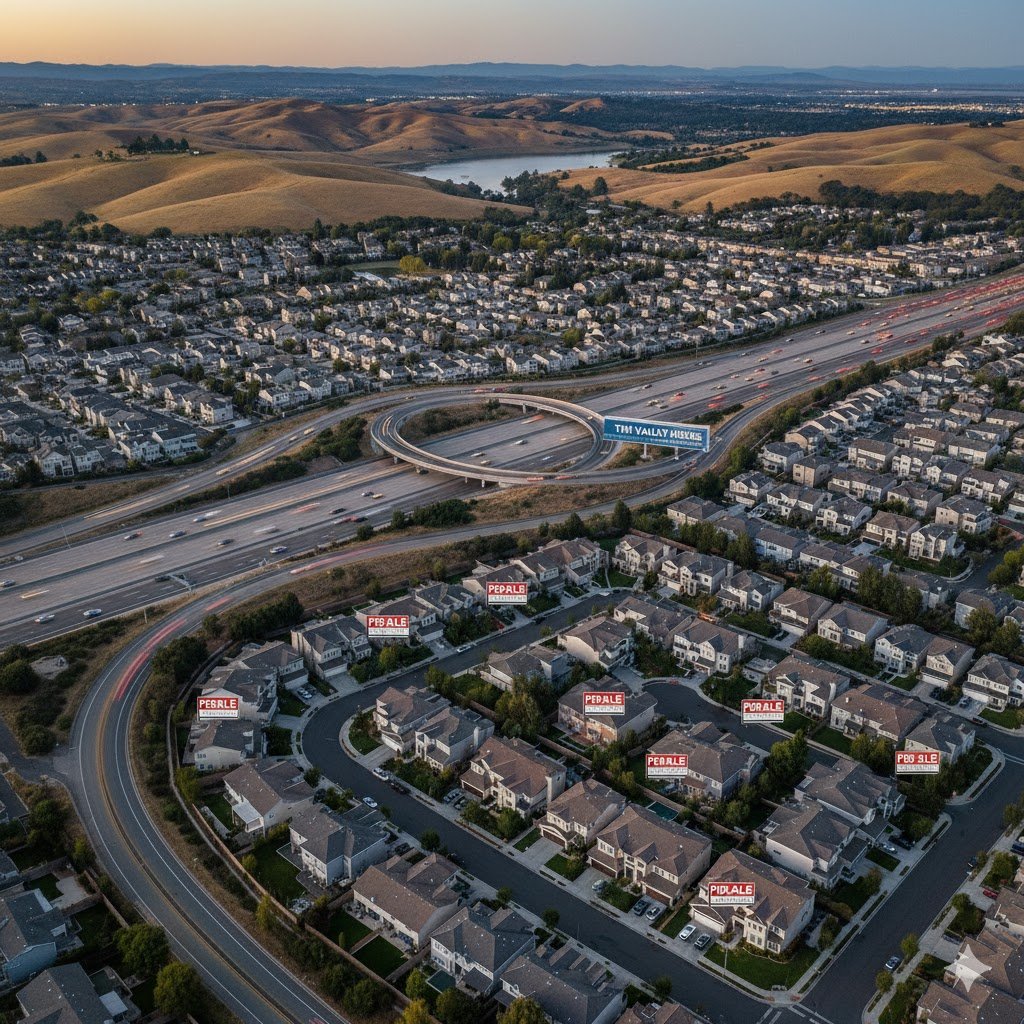
The San Francisco Bay Area real estate market of 2026 has entered a phase of structural normalization. The frenetic bidding wars of the early 2020s have been replaced by a "cautious equilibrium," where high-income professionals—bolstered by a surging AI sector—are migrating toward the suburban excellence of the Tri-Valley. Encompassing San Ramon, Dublin, Pleasanton, and Livermore, this region offers a compelling alternative to the urban core. However, determining where a budget "goes furthest" requires an analytical framework that looks far beyond the sticker price.
The Supply-Side Lock-In and Shifting Buyer Leverage
A defining characteristic of the 2026 market is the "lock-in effect." With current mortgage rates hovering between 6.0% and 6.3%, homeowners holding legacy rates of 3% are disincentivized to sell. This suppressed inventory creates a high floor for property values. Yet, buyers have regained leverage; the average time on market has stretched to a sustainable 40–60 days, allowing for thorough due diligence and negotiated terms that were impossible just years ago.
Micro-Market Profiles: Architecture of Value
Each municipality in the Tri-Valley presents a unique value proposition:
-
San Ramon ($1.3M Median): The epicenter of master-planned living. Neighborhoods like Gale Ranch offer turn-key, modern homes and elite schools (SRVUSD). Value here is found in "aesthetic uniformity" and lifestyle amenities.
-
Dublin ($1.3M – $1.4M Median): The transit-oriented choice. With two BART stations and aggressive new development, Dublin is the fastest-growing hub. It offers the newest housing stock but often trades lot size for convenience.
-
Pleasanton ($1.5M – $1.6M Median): The "Heritage" play. Known for its walkable downtown and prestigious schools, Pleasanton commands a premium. While the homes are older, the land value and civic stability are unparalleled.
-
Livermore ($1.1M Median): The "Space" play. Here, the budget secures the most acreage and square footage. Though geographically further from San Francisco, the Altamont Corridor Express (ACE) train offers a strategic "commute hack" for Silicon Valley workers.
The Hidden Math: Carrying Costs and Climate Risks
True affordability in 2026 is dictated by three invisible factors:
-
Mello-Roos and Taxes: In newer developments (San Ramon/Dublin), Mello-Roos assessments can add 0.2% to 1.0% to the effective tax rate. An older home in Pleasanton at a higher price may actually have a lower monthly payment than a cheaper new build with heavy assessments.
-
The Insurance Crisis: As private insurers restrict coverage, homes in the Wildland-Urban Interface—particularly the San Ramon foothills—are being forced onto the California FAIR Plan. This can triple annual insurance costs ($4,000–$8,000+), making valley-floor properties in Dublin or Pleasanton more fiscally sound.
-
Educational Capitalization: A top-tier school district (A+ rated) acts as a $30,000+ annual "subsidy" by removing the need for private tuition.
Strategic Conclusion
Optimizing capital in the 2026 East Bay market is a multi-variable calculation. For educational maximizers, San Ramon and Pleasanton remain the gold standard. For transit optimizers, Dublin’s rail access is peerless. For those seeking raw square footage, Livermore offers the most physical asset for the dollar. By accounting for the hidden architecture of monthly payments—taxes, insurance, and transit—buyers can find sustainable value in California's most resilient suburban corridor.