For the past few years, the housing market has felt like a waiting game. Buyers, sellers, and homeowners alike have been holding their breath, asking the same question: When will mortgage rates finally drop?
After the whiplash of rates plunging below 3% and then surging past 7%, the 2026 forecast offers an answer—just maybe not the one everyone was hoping for. The consensus among leading housing economists is not for a rate crash, but for a "new normal."
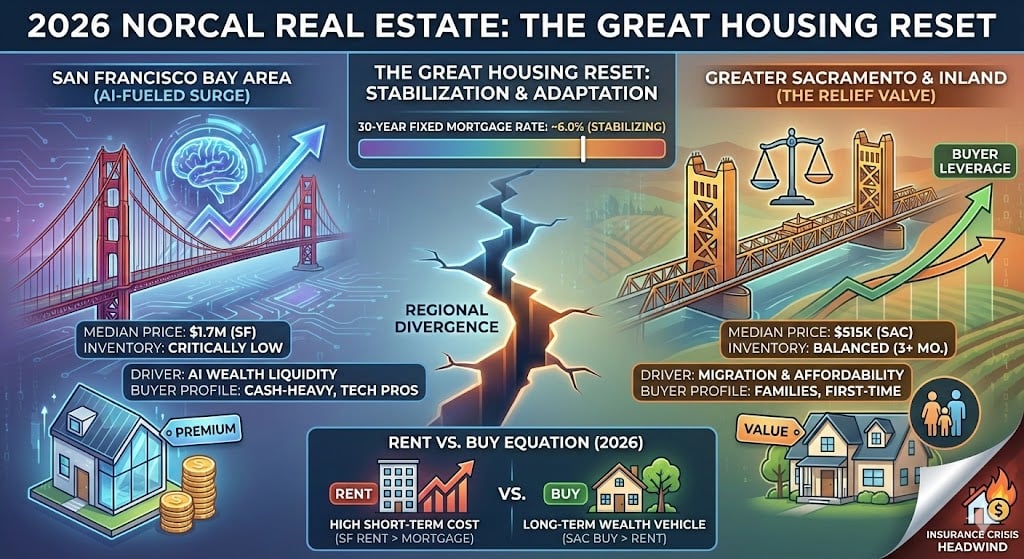
The sub-4% rates of the pandemic era are not coming back. Instead, 2026 is shaping up to be the year of the 6% floor, with major institutions forecasting that the 30-year fixed rate will stabilize in a range between and .
The Great 6% Debate: Two Competing Visions
While the consensus has settled around 6%, there is a critical divide on where in that range we’ll land.
- The "Optimist" Camp (Sub-6%): This group, led by Fannie Mae, projects that 30-year fixed rates will gradually ease, ending 2026 at . The National Association of Realtors (NAR) shares this view, forecasting an average of to for the year. This view assumes that as the Federal Reserve cautiously cuts its policy rate, the abnormally wide spreads in the bond market will shrink, pulling mortgage rates down.
- The "Structuralist" Camp (Above 6%): On the other side is the Mortgage Bankers Association (MBA), which sees rates remaining "stuck" in a to range not just for 2026, but potentially for years to come. This view is supported by forecasts from Wells Fargo () and the National Association of Home Builders (). Their reasoning is structural: they argue that "fiscal pressures"—namely growing federal deficits—and sticky inflation will keep long-term borrowing costs high, even if the Fed makes a few cuts.
The "Market Thaw": What 6% Rates Mean for Housing
The most significant impact of this stabilization is what it does to the housing market. After three years of paralysis, the "lock-in effect" that has frozen both buyers and sellers is expected to finally thaw.
A stable 6% rate environment appears to be the "acclimatization point". It’s not low, but it’s predictable. This predictability is forecast to unlock the market, but in a very specific way:
- Sales Volume Explodes: With buyers coming off the fence and sellers (like Baby Boomers) finally deciding to list their homes, transaction volume is projected to surge. The NAR is forecasting a jump of to in existing home sales.
- Price Growth Stalls: This new wave of demand will be met by a new wave of supply. This balance is expected to put the brakes on runaway price appreciation. Forecasts for home price growth are modest, returning to a "return to normalcy" pace of just to .
In short, 2026 is poised to be the year the market uncouples. It will transform from the recent, bizarre market of low sales and high price growth to a much healthier, more traditional market of high sales volume and low price growth.
For anyone waiting for a return to 4% rates, the forecast is clear: that ship has sailed. The 2026 story is one of stability.